Apr 15, 2025
Lorem ipsum dolor sit amet, consectetur adipiscing elit. Praesent hendrerit sit amet nibh eget consequat. Morbi malesuada arcu a laoreet hendrerit.…



Lorem ipsum dolor sit amet, consectetur adipiscing elit. Praesent hendrerit sit amet nibh eget consequat. Morbi malesuada arcu a laoreet hendrerit. Morbi sit amet ullamcorper orci. Vestibulum non sapien auctor erat commodo convallis eu eu tellus. Sed fermentum lorem a tempor auctor. Etiam et cursus nibh. In eleifend nisi quis nisi iaculis porttitor. Suspendisse egestas dui nec dui aliquet, ut dignissim ante vulputate. Aliquam vel est eu quam sagittis blandit.
Sed sit amet mi posuere, congue nunc non, consectetur velit. Praesent at purus nec massa auctor elementum. Phasellus sed ipsum sit amet eros tincidunt mollis. Duis tincidunt nunc sed molestie ornare. In feugiat elit risus, ac accumsan augue consequat a. Cras maximus facilisis quam quis pharetra. In ex ligula, mollis cursus condimentum vitae, dictum a orci. Suspendisse vehicula magna quis tellus dictum varius. Proin non tincidunt magna.
Mauris nisi ipsum, pharetra in congue ut, suscipit eget arcu. Phasellus vehicula sapien ut lobortis efficitur. Praesent ante velit, fringilla vel felis fermentum, sodales commodo tellus. Curabitur id pharetra purus. Praesent aliquet malesuada semper. Phasellus dignissim ac nibh in luctus. Pellentesque risus urna, vestibulum nec elit sed, pharetra faucibus urna.
Mauris sapien lorem, ultrices nec luctus vitae, rhoncus ut nulla. Proin at odio efficitur, tempor est quis, pulvinar sem. Vestibulum ante ipsum primis in faucibus orci luctus et ultrices posuere cubilia curae; Vivamus dictum eros metus, id condimentum tellus scelerisque sed. Etiam scelerisque quis ante ut efficitur. Nulla lorem magna, fringilla at tellus id, sollicitudin sodales tellus. Suspendisse venenatis venenatis leo at aliquet.
Phil Sobol:
Welcome to The CereCore Podcast, where we focus on the intersection of healthcare and IT. From practical conversations to strategic thought leadership, let's unpack the decisions, challenges, and journey of those whose purpose it is to deliver technology that improves healthcare in their communities.
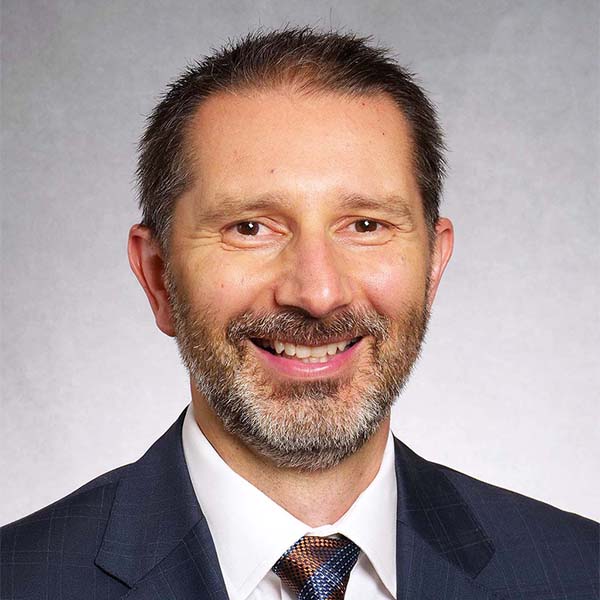
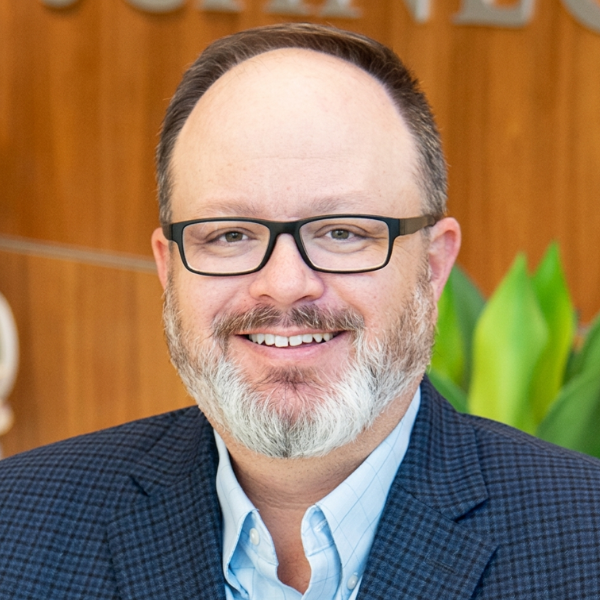
Today, we are pleased to welcome Craig Rice to The CereCore Podcast. Craig serves as vice president and chief information officer at Schneck Medical Center in Seymour, Indiana. Schneck is an independent community-owned health system and the only organization in Indiana to receive the Malcolm Baldrige National Quality Award. It has also earned Magnet Designation for Nursing Excellence four consecutive times and recently completed their site survey for a fifth.
Craig has spent most of his career at Schneck, recently leading a significant MEDITECH modernization and hosting transition while expanding interoperability and advancing optimization efforts. He brings a practical perspective on AI and what it truly takes for a community health system to remain independent in a competitive market. Craig, welcome to The CereCore Podcast.
Craig Rice:
Thank you for having me, Phil. So excited to be here.
Phil Sobol:
Well, we're thrilled to have you. You started at Schneck in I think 20... 2008, if I remember, in IT, Lean Six Sigma, and then left for a brief stint at Cincinnati Children's, and then came back as CIO in 2021. What brought you back to Seymour, and what did that time at a large academic medical center teach you that you carried back home to Seymour?
Craig Rice:
Yeah, so I think looking back at my career and where I've been, I feel pretty fortunate to have worked for two amazing mission-driven organizations. The opportunity that I had in Cincinnati, it was just... it was an incredible opportunity. It was hard to ignore and moved my family over there, and I thought, "This is it. I'm retiring from Cincinnati Children's." It was an incredible opportunity. What we obviously didn't expect at that time was I started there, and then COVID hit.
Phil Sobol:
Yeah.
Craig Rice:
And one of the reasons why I have such a huge amount of respect for both Schneck and Cincinnati Children's, a lot of organizations at that time, they were laying off people. It was a real challenging time for folks to get through. And the senior leadership in Cincinnati said, "Hey, we're not letting folks go. We're going to need folks once we get out of this challenge."
And the approach was just, "We care about our people." And that was demonstrated every single day. And I think back to Schneck, that same culture of, "We care about our people. We know we need our people to be successful," that was huge for me. And so I feel very fortunate to have worked for two pretty special places. And why I came back to Schneck, I mentioned, I thought that was it. I thought I was going to Cincinnati. I'm not coming back. But Dr. Fish became CEO in 2020. I admire and respect Dr. Fish tremendously.
He is Seymour, Indiana, through and through. And when he became CEO, he had a very clear vision for the future. And an opportunity came up for me to come back, and it was hard to ignore the opportunity to come back. And one thing I will add, I never lost touch with my folks at Schneck. As a matter of fact, we had our fourth child while I was working at Cincinnati, and we actually came back to Schneck to have our fourth job because we love all the OB docs and all the caregivers and...
And so I love both places for sure, but certainly had an incredible opportunity at Schneck. And I think what do I bring back, and what did I learn? When you think about an organization like Cincinnati, that's a 3 billion-dollar-plus organization, it's obviously vastly different than your traditional county hospital. But I think that they deal with the same challenges that we deal with. It's EMR optimization. It's how do we truly take care of the folks using this technology and the tools? How do we take care of them so that they can take care of the patients?
Phil Sobol:
Yeah.
Craig Rice:
That is fundamentally, I saw that in a bigger place, and it just maps right to what I know and love here in our local community in Schneck.
Phil Sobol:
Yeah. No, that's great. And you mentioned that Dr. Fish is Seymour through and through. From what I understand, a good bit of the Schneck leadership has spent a good majority, if not all of their lives, in that community. And so what is that kind of personal investment? How does that change how decisions get made, especially big ones, say around technology or even remaining independent?
Craig Rice:
We talk a lot about growing our own.
Phil Sobol:
Mm-hmm.
Craig Rice:
And when you're a rural hospital, you're... it's hard to recruit, right. It's hard to bring in folks into your organization. And as a matter of fact, when you're recruiting, you've got to find folks that are bought into small-town, rural, mission-driven healthcare organizations. So that's a challenge. So we are very intentional about growing our own.
And part of that is there are very few people here who probably don't have a family member working here. And so you think about the care and the jobs that we have, we really are taking care of people we know. We're taking care of our families. We're taking care of our friends. We're taking care of key folks in the community. It is a very family-oriented operation.
And I think that's one of the reasons why we strive to remain independent. We want to keep those decisions local. We don't do an international search when we are hiring for an executive position. Now, who knows? That may change in the future, but we really have... we really strive every day to grow our own, and we have a lot of specific programs around that.
Phil Sobol:
Yeah, that's fantastic. And it's certainly evident a couple of times that I was able to visit, and it is even the story about going back to have that fourth child. I mean, that speaks volumes to the sort of care and compassion, understanding, and just connection between the health system and the community, which is fantastic. So for those of our listening audience that may not kind of understand Indiana, Schneck sort of sits in, I guess it's called Southern Indiana, but sort of-
Craig Rice:
Yep.
Phil Sobol:
... halfway in between Indianapolis and Louisville, Kentucky. And you're sort of surrounded by some large Epic-based health systems. You all have made that deliberate decision, as you spoke about, to stay independent, but also to stay on MEDITECH. So what is... what does that decision actually require from a technology standpoint to pull off?
Craig Rice:
Yeah. So, to your point, we are almost exactly halfway between Indianapolis and Louisville. And you think of all the big, large hospital systems that dominate those areas, you're right, they're on Epic. And so for us, when I came back in 2021, we didn't go into this with MEDITECH as the first place, the vendor of choice.
And as a matter of fact, back to my time at Cincinnati and using Epic, it really opened my eyes as to what's possible in terms of EHR and technology and what we can do to improve the way that our providers and our caregivers function and operate.
So when I returned in 2021, we were committed to have an open selection process that engaged stakeholders from across the organization. And we even went as far to hire an outside firm to help give us a framework and guide us along that path. I mean, we don't do this every day, right. We don't select an EHR every day.
Phil Sobol:
Exactly.
Craig Rice:
So we really wanted an outside perspective to make sure that not only did we have a fair process, but we were doing the right things to make the best decision for the organization. And looking at it, doing all the due diligence and looking at the market, we narrowed it down to Epic through the Community Connect Partner program and MEDITECH Expanse, and went through this incredibly robust demonstration process and evaluation process.
And ultimately, based on that feedback and survey data from providers, and nurses, and other stakeholders, they rated Expanse as the best overall solution for Schneck. It wasn't a decision made on, well, what's the lowest cost or what is some other metric. It was really about what do our key folks in the organization, our providers and nurses, how do they view the product and what is their feedback and how do we think this is going to work best for Schneck.
Now, it just so happens that the independence piece, I think it was certainly a huge factor in that decision, because once you go Epic Community Connect, you are partnered with someone else, another hospital, most likely in your region. And so for us, that was sort of like the icing on the cake that it's our own system. We are the ones who are going to management... manage it. We're not just a vote amongst a bunch of other hospitals on how we're going to manage our environment.
Phil Sobol:
Right. No, I think that makes great sense. Makes great sense. And you still have to interact with those systems. And so I think you all have implemented MEDITECH Traverse, which allows Schneck to share data with those neighboring Epic systems. How important has that interoperability been to your independent strategy, and how does that work on a day-to-day basis?
Craig Rice:
Yeah. So that was a top priority for us during the selection process. And that goes back to my experience with Epic and Care Everywhere and Epic's native ability to share data amongst Epic hospitals. They really set the bar years ago about how to share information across organizations.
Now, what we had seen, to give a little background on the challenges that we were experiencing, Indiana has one of the most mature and oldest information exchanges in the nation, but what we were seeing was some Epic organizations were reducing or not sharing information with the Indiana Health Exchange. So, for us as a non-Epic organization, we were having a hard time getting information we needed from those hospitals.
Sure. Some organizations would give you access to CAREweb, but it's popping out of the EHR, you're having to go to Hospital A or Hospital B or Hospital C, and just look the patients up and try to find that information. So it really became a challenge, and it was one of the key strategic items as part of the selection process that if MEDITECH didn't have the Traverse capability in the pipeline, that could have been a decision point for us not to move forward with MEDITECH.
That's how challenging this exchange of data really became for us. So obviously, we moved forward with Expanse and spent a lot of time, especially as an early adopter with Traverse, and it was fascinating that day one of go-live, we were exchanging information with Epic hospitals. And it was like, I had seen it for months, right.
Phil Sobol:
Right.
Craig Rice:
We're testing, we're doing all this work, we are... And it finally came to fruition. And it was just such a powerful moment that like, "Okay, this is one of our flags in the ground that..."
Phil Sobol:
The must have.
Craig Rice:
Yeah. We had as part of this project, and we were starting to see a positive impact from that. And not long after go live, we implemented the Traverse Consolidated Viewer. And so if you think about other solutions, it's basically transmitting CCDs across organizations, and you might have 20 CCDs to review and it can be a lot, right.
It can be very challenging if you're a doctor trying to understand the care that has happened outside your walls, but with a consolidated viewer, it brings all of those CCDs that the patient has and puts them in a way that the provider can quickly look at the key things that matter to them.
And so to me, it's like that is the power of Traverse Exchange. And that is really what made such a huge difference for our providers to be able to quickly access that information outside of the more traditional regional exchanges.
Phil Sobol:
No, that's excellent and certainly powerful story, and helps with that independence for sure. So you've talked a little bit about it, right. Schneck went through a full MEDITECH-ready implementation, transitioned to CereCore hosting, expanded into ambulatory, and have now been going through optimization work really ever since. Looking back on that whole arc, what was probably the hardest part to get right?
Craig Rice:
Phil Sobol, the hardest part to get right was the part that people warned us about, that we still, I think, should have done more, and it's around interoperability and third-party solutions.
I can't tell you how many folks we talked to from reference sites and folks that had been on this journey well before us. They said, "Yeah, you're going to need help with interfaces, interoperability with third-party solutions, contracts," and I kid you not, we threw so much at it, we should have doubled it.
And I would say for folks listening to this podcast, if you walk away with one thing, and you're considering implementing, I don't care what EHR it is, if you walk away from this podcast, whatever you think you need to double it in terms of those third-party implementations, it is huge.
Phil Sobol:
Yes.
Craig Rice:
And I would say one of the biggest barriers we had, not only just thinking about implementation of those things, but it was the contracts. And that process, we started not long after we signed the Expanse contract, and we had a little bit of time to start prepping. I mean, we started this months in advance, and I kid you not, we were signing contracts, it felt like until go live. It was incredible how challenging that was. And we had a dedicated project manager and we could have used two project managers. It really was a challenge.
Phil Sobol:
No, I've certainly seen organizations have a project manager just for that discipline.
Craig Rice:
Yeah.
Phil Sobol:
Make sure. So no, I really appreciate the call-out on that one.
Craig Rice:
Yeah. And for folks that we probably had somewhere in the neighborhood of 80 integrations, and I don't know if that's high or low compared to other people, but it ended up... it really was overwhelming at times for our team. So definitely invest in that area.
Phil Sobol:
Agreed. Agreed. So that implementation alone was a significant undertaking. How do you keep your team and, really, the rest of the organization steady throughout a project of that scale? It's got to be a monumental task.
Craig Rice:
Yeah. I think back to some of the calls we had with other hospitals and CEOs and CIOs, and one of them shared, "This will be the hardest project you ever go through." And this was coming from an organization that completely built a brand new hospital in a completely different location and moved their entire organization across town. And so I think that for us, I think we recognized that very early on that it was important to have not only executive alignment, not only provider and nurse alignment, but also board alignment.
And part of that is consistent communication, consistent expectations, and maybe most importantly, fast decision-making. You get into a project of this size, it can be easy for decisions to route through a bunch of different hands and slow things down. You have got to be okay making fast decisions, knowing that you're not going to be perfect and you're going to have time to fix it. And we call it optimization, right?
Phil Sobol:
Yes. Yes.
Craig Rice:
I jokingly will share that optimization, sometimes we made a bad decision, and we're going to go back and fix it. So, to me, I think that consistent communication, setting expectations, and fast decision-making are key. But I think another piece of it, at Schneck being a bit of a family environment, have fun. I think that's such an important piece because it can be easy to get down-
Phil Sobol:
[inaudible 00:19:04].
Craig Rice:
... to get frustrated. You've got to have some fun as part of this, and you've got to have key leaders of the organization who show that, "It's okay to be a little vulnerable, it's okay to have some fun, we're going to get through this." And one of the things that we did is I hosted a podcast with our CMO. We branded it as Into the Expanse because I am a bit of a nerd. I do love science fiction.
Phil Sobol:
Oh, yes.
Craig Rice:
So we branded it Into the Expanse, and we just did a bunch of funny stuff. And we'll probably look back on it and regret some of the things we did, like me and our CMO riding on the back of a... Have you seen those ride-on floor cleaners?
Phil Sobol:
Oh, yes. Oh, yes.
Craig Rice:
We might have been driving those around the hospital and on video with light savers. So have some fun with it. And I can't tell you the number of folks who came up to me and they really appreciated that.
Phil Sobol:
Absolutely.
Craig Rice:
Just the silliness that we would bring to it. But we always tried to make them educational and tried to make them in a way that folks could get something out of them.
Phil Sobol:
That's fantastic and great advice. And I love just talking about quick decision-making because sometimes organizations can get very, very paralyzed, and it makes things a struggle. But yeah, quick decision-making, a lot of fun, that's perfect advice. And you mentioned optimization, and you've been doing that rev cycle work with MEDITECH. What are you seeing now as kind of the biggest gains post-implementation for your clinicians and staff right now?
Craig Rice:
So I think we're still early.
Phil Sobol:
Yeah.
Craig Rice:
Obviously, we have some things in the pipeline that we feel have been very impactful. We obviously talked about Traverse Exchange. We've been working on a project with MEDITECH around provider and their workflow analytics, and measuring sort of pre-Expanse and post-Expanse. And so we've been able to use some of the data that we've captured to help educate our providers on certain areas of Expanse that can help them move a little faster.
Phil Sobol:
Yes.
Craig Rice:
So we're really excited about that. We still have a lot of opportunity there. We have another assessment coming up here in a month or so, but I think those are the kind of things that are allowing us to make decisions based on data. And things that we couldn't have tracked in client-server before, we are now starting to surface these actionable things that really can help us drive performance. And it's as simple as, "Hey, did you know this tool is available in Expanse?" And it's really been able to drive some conversations toward improvement.
Phil Sobol:
Yeah. No, I think that's fantastic. And certainly at CereCore, we had the privilege of kind of being alongside you and helping you along this journey. And so, just in looking at where you were and where you're going and kind of the results that you're ultimately looking for, what are some of those targets that you and Schneck are really looking to get out of this project overall as you look into the future?
Craig Rice:
Yeah. So, a couple of things from my perspective, and I want to talk a little bit about the relationship with CereCore, because just like we did a selection process around MEDITECH and Epic and what the right EHR is for us, we did the same thing around who is going to be our partner for this journey.
And we talked to a lot of different organizations. And Phil, I think you and I even talked about, at one point, that folks that come in here and are transactional, that's not the kind of group we want to partner with. We want somebody who has invested in us and invested in the partnership and is really ultimately here for our community.
And so it was very evident as we went through the process that CereCore was just the fit for us from that perspective. And I think as we looked at that partnership, part of what we were looking for was a mix of, I mean, we all know the ready process in this space.
Phil Sobol:
Mm-hmm.
Craig Rice:
Part of what we were looking for was just that strategic advisor. It's one thing to provide consultants and do an implementation by the book. That's great. We needed that because we don't do this every day, but we really needed folks that were really strategic partners for us because we wanted to push the envelope. And I think you know that, MEDITECH knows that.
Phil Sobol:
Oh, yes.
Craig Rice:
We were not doing a base install here. We were going to push the envelope and really try to push this organization forward and be a leader in the MEDITECH space. So those... we needed a partner who was aligned with us on that.
And when you think about what were our goals and sort of that long-term where we're going, I think one thing that the CereCore team did incredibly well was to give us what those milestones should be and to help guide us down the path of, are we thinking about things the right way?
Are we thinking about what truly is a milestone versus maybe MEDITECH has a little bit of different perception on what's really critical at the time? And I think CereCore just brought that expertise that allowed us to think a little bit differently about the implementation and allowed us to focus our efforts in the right places.
Phil Sobol:
I think that's great. There are always challenges, right. And the software vendor, provider, they have their perspective point of view and their experts on their platform. You all are experts in healthcare, delivery of healthcare to your community. And sometimes there's that middle ground, which we were fortunate enough to serve for you all is almost that translation between the two.
Craig Rice:
Yeah. For sure.
Phil Sobol:
Say, "How do we marry this and this together to bring about that much bigger end result that makes sense for everybody?" So I think that's great. From your perspective, and maybe if you could just sum it up, what would be... as you're sitting in the CIO chair, how would you differentiate a vendor from a partner when it comes to truly becoming an extension of your organization?
Craig Rice:
And I think the word extension of our organization is very appropriate. And this is sort of a byproduct product of that, but the entire CereCore team that was involved in our project, they were on our Schneck email system. They were showing up in our employee directory, even though obviously it's an implementation project, but we did that very intentionally because we wanted folks to be able to communicate and collaborate in the fastest way possible. And we really positioned them as an extension of our team.
Folks are on a first-name basis. You go back to fast decision-making. We didn't want to have layer upon layer that would slow us down. And so our core teams, our key stakeholders, had direct contact with their CereCore person. And so I think from that perspective, it just goes back to that partnership, and that alignment is really important with... No matter what partner you choose, that piece of the puzzle is really important. And we love the fact that your folks were just sort of ingrained into our culture and in our environment.
Phil Sobol:
No, that's excellent. And we've got a lot of our team members that listen to the podcast and who have been supporting or are currently supporting Schneck. What would you say to them about the real-world impact that their work has had on your clinicians and your patients there in Seymour?
Craig Rice:
I mentioned this a little bit before, but I think when you're in a community, a small community hospital like this, folks that are tied into the mission and believe in the mission, those are the kind of folks that really excel, and we want to nurture that here at Schneck. And we talk in IT a lot about, we're a service department, right. We are here for support. And what that really means, our why in IT really is about taking care of the people that take care of our friends, our family, our patients, our community.
And the CereCore folks that were involved in our project, and maybe folks we didn't even see as part of the project in the background, the same goes for them. What they do every day, what they did on this project, help us modernize, help us take that next step in our digital journey, and allows us to truly provide that support and take care of the folks that are taking care of our patients, family, friends, and community.
Phil Sobol:
Wow, appreciate that. And that's excellent. So, being it's 2026, I can't just skip over the concept of AI. So, since Schneck just went live with Suki for Ambient AI documentation, so what makes this the right moment to take that step? And what have you seen from clinicians in the early days post-adoption?
Craig Rice:
Yeah, so it's interesting, right. You can't have any conversation today without it being something tied to AI, but I think the way that we have gone about introducing AI into the organization, I would phrase it as responsible AI. We are not going to be an early adopter. We are not going to be an organization that is out there creating a in-house product, but we want to make sure that we've got the right partnerships in place to help move the organization forward.
And ultimately, how can we improve care? How can we be more efficient? How can we utilize AI in a safe and secure manner? So we're going to take a very responsible approach to AI. And as you mentioned, we went live with Suki about a month ago. We had a small pilot group before that. We've got a larger group now where we're bringing all of our providers who are interested to the table in a very large-scale proof of concept.
Phil Sobol:
Yes.
Craig Rice:
And we've taken a very measured approach with it. But why now part of it is we had to get to Expanse to start setting the stage for us to be able to incorporate AI that is integrated into the Expanse environment. And that goes back to the why now. Now that we're starting to get Ambient AI solutions truly integrated into Expanse, that takes a number of steps out of the workflow. If you use DAX, Suki, any other AI tool previously, there was copy and paste, there was no integration between the EHR and the note that you were making through AI.
And so, now that those tools are starting to become integrated, that just really starts to streamline how a provider can function during the day. So that was sort of the why on the timing. And some early feedback that we've received. So we're probably around 50% utilization right now in terms of the number of providers here at Schneck that are using Suki. And we've got a bunch of anecdotal feedback, and we had one provider who told me the other day that, "Please don't take this away. It's transformed my life."
Phil Sobol:
Yes.
Craig Rice:
So that was great. And we had another provider who mentioned, "I couldn't get out of here until 6:30 or 7:30 at night most nights. And even working some weekends to wrap up my documentation." And first week of Suki, that person mentioned they were getting out of here around 5:30, and then they weren't having to spend pajama time or spend weekend time on their documentation. So we've got a lot of good anecdotal feedback so far.
I mentioned the provider productivity analytics that we're working through, and we've got our next checkpoint in April. And I think we're excited to see where that data... what that data shows. And for the folks who are advanced users of Suki, do they truly see a... do they truly see an improvement in the amount of time that they spend in the chart? So we're really looking forward to that.
Phil Sobol:
Yes. No, and can't wait to hear the results of that. And it's always fantastic when you implement something to get that sort of anecdotal feedback, because it truly is transformational, like you said, taking care of the people that take care of our patients. And that's just the first, right.
You're looking at thinking about what comes next and how do you, as an organization, evaluate new technology like Suki, like AI, without getting pulled off of your operational priorities that you really just can't lose focus on. So what does that process look like there at Schneck?
Craig Rice:
Yeah. So we've... we started this a little bit... a little while ago, but for us, AI governance has been an important piece of the puzzle. And I would say in its simplest form, in our organization, we were not approving an AI project without executive sponsorship. So that's like in its most basic form. We wanted to make sure that we had a very hands-on approach to how we're approving AI projects. We're starting to mature a little bit in our governance process.
We now have a formal submission form for AI projects. We have participation from our Clinical Steering Committee. We have participation from our Nurse Informatics Council. And so we're starting that to get better alignment across the organization before it makes it to the executive team on potential AI projects. So I think for us, we're starting to mature on that. But I go back to what I mentioned about responsible AI. We know it's a bit of the wild, wild west.
And so as an organization, we've got to make sure that we have the right guardrails in place to make sure that we are implementing safe and secure technology, but also not putting up roadblocks for technology that is truly beneficial, like Ambient AI, like some of the things around patient engagement that are coming down the pipeline. We've got to be able to sort of push the accelerator, but still have some guardrails there.
Phil Sobol:
Yeah. No, I think that's perfect. So we've come to the end of our session today, and I always like to leave the audience with just kind of one final question for you, which is really just any final advice, or let's say, community hospital CIOs who are trying to stay innovative, trying to stay independent, and really keep their teams from burning out.
Craig Rice:
Yeah. So I'll go back to one of my comments that if you're a CIO that's looking to implement a new EHR, double your budget, double your effort on any integration. So that's number one.
Phil Sobol:
Yes.
Craig Rice:
But beside that, I would say, some things to think about. Obviously, in this role, the vision and strategy is very important. Setting a direction for your organization about where you need to go is important. But I'd also say that blocking and tackling matters. You can't throw new technology, you can't throw a new EHR into a broken process and expect it to just all work out. So sometimes that blocking and tackling matters.
Phil Sobol:
Yep.
Craig Rice:
I'd also say not every opportunity is worth pursuing. Be okay saying no. And that's a hard one. And it's a hard one for executive teams at times when you've got physicians, and you've got nurses, and you've got all of these people who want this and want that. You got to be okay saying no at times. Maybe it's not no forever, maybe it's just no right now, but you got to be okay saying no, especially if you're going through a gigantic digital transformation initiative.
And then the last piece for me, and this kind of goes back to the integrations and interoperability, we're all challenged from a funding perspective, a budget perspective. Payers are not paying us more. I understand how folks could feel like they don't have the money to spend on an EHR project or an optimization project.
But I would challenge that thinking a bit because if you're like us, you're setting the stage for the next 20 years, and that investment upfront matters. Don't underfund your EHR projects. Don't go into it trying to find ways to cut spend. This project matters. Make sure you fund it appropriately and make sure you've got a board and an executive team who are aligned on that.
Phil Sobol:
Yes. Craig, I think those are great words of advice. And you touch on something that sometimes organizations, particularly in the rural space, they struggle with a little bit, and that's the alignment and that communication of that long-term vision of where they're going.
But what we find, and you guys were a great example of that, is once that alignment is set and effectively communicated from the board all the way down, then it does become a little easier to say no, because people go, "Oh, I get it because of this.
And I know I see where we're going. I'm bought in where we're going. And oh, by the way, we're doing all of these things." Why? Well, it helps the organization, but it also serves the community, and that's what it's all about. So Craig, thank you for your partnership. Thank you for your time today and your insights for our listening audience.
Craig Rice:
Well, thank you, Phil. And I appreciate all that CereCore has done, all that you've done. And a big shout-out to Lindsay Tahiry and the entire project team at CereCore, who have done amazing things for us. Really appreciate it.
Phil Sobol:
Excellent team. Thank you, Craig. Thanks for listening to The CereCore Podcast. We hope you enjoyed this conversation. Follow us on your favorite podcast platform for more episodes. Connect with us on LinkedIn. Visit our US website at cerecore.net. And for those abroad, visit cerecoreinternational.net.
Learn more about our services and find resources. At CereCore, we are healthcare operators at heart and know the difference that the right IT partner can make in delivering quality patient care 24/7. Let's help make IT better. Here's to the journey.
Lorem ipsum dolor sit amet, consectetur adipiscing elit. Praesent hendrerit sit amet nibh eget consequat. Morbi malesuada arcu a laoreet hendrerit.…
Lorem ipsum dolor sit amet, consectetur adipiscing elit. Praesent hendrerit sit amet nibh eget consequat. Morbi malesuada arcu a laoreet hendrerit.…
Lorem ipsum dolor sit amet, consectetur adipiscing elit. Praesent hendrerit sit amet nibh eget consequat. Morbi malesuada arcu a laoreet hendrerit.…
Let us know how we can support your initiatives and take some of the heavy lifting from healthcare IT.